

Free Screenings
Join us on Saturdays from 9 am – 2 pm for FREE Screenings
(first come first serve basis, about 8 patient slots available per Saturday)
“This place provides Free Screenings every Saturday. I went to check my shoulder problem during their Free Screening event. The physical therapist took enough time to patiently assess me and also explain why I am getting the pain and how to fix it. I went for a few sessions of therapy following that. The treatment and tips they provided were very useful. I am a lot better now and play without limitation. I would recommend you use their free screening as they are very good at identifying problems at the very root stage level and treating them too.”
– Bhavya B.
Overcoming Motion Sensitivity and Vertigo: A Guide to Vestibular Rehabilitation
— December 2025 —
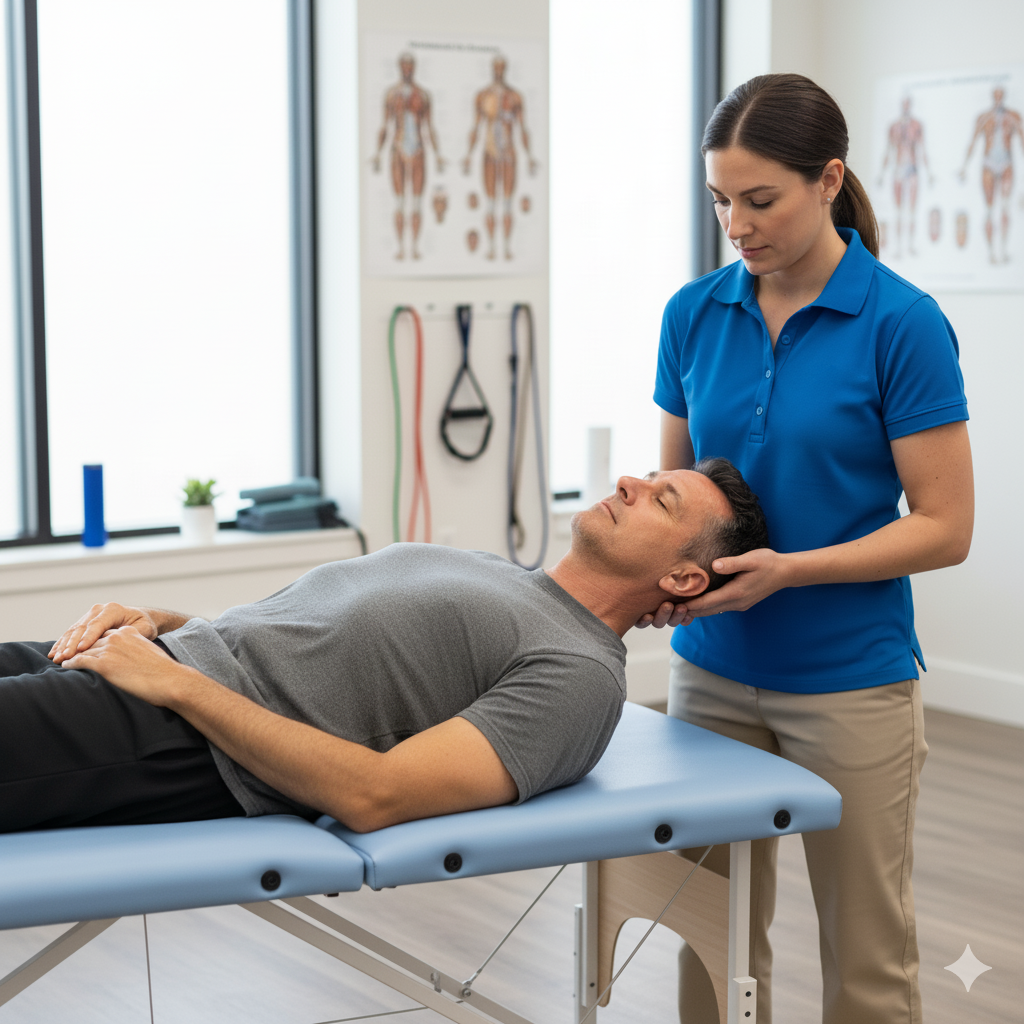
Do you ever feel like the world is spinning around you, especially when you get out of bed or visit a busy grocery store? This sensation, known as vertigo, can make daily life significantly more challenging than it needs to be – as can other related sensations, such as dizziness or lightheadedness.
These symptoms often indicate a problem with your vestibular system, the part of your inner ear and brain that helps control balance and eye movement. Fortunately, vestibular rehabilitation, a specialized form of physical therapy we offer at Therapy Fit Physical Therapy, can help address this dysfunction so you can move with confidence once again.
Understanding Vestibular Rehabilitation
Structures in the inner ear interpret movement signals from the body and send them to the brain. When these signals are disrupted, your brain receives conflicting information from your eyes and body, resulting in symptoms such as vertigo, nausea, or motion sensitivity.
Vestibular rehabilitation is a personalized exercise-based program that directly addresses these disruptions. It helps correct the eye-body-brain mismatch through repetitive, targeted movement patterns that strengthen the body’s ability to adapt.
Key Benefits of Vestibular Rehabilitation
- Better balance and steadiness when walking or standing
- Reduced dizziness and visual sensitivity
- Decreased risk of falls
- Improved confidence in daily activities
- Faster return to normal movement patterns
What to Expect During Vestibular Rehab
We’ll begin with a detailed assessment that measures balance, coordination, eye movement, and head motion. This allows us to create a treatment plan tailored to your specific symptoms and goals.
Initially, you may notice that certain movements cause mild dizziness. While alarming, this is a normal response, often indicating that your brain is adapting to the situation. Most people notice improvement within a few weeks of consistent therapy, especially if they stay consistent with prescribed at-home exercises.
We’ll continue to adjust your exercises as your balance and coordination improve, ensuring you make steady progress toward comfortable, symptom-free movement in daily life.
The Techniques and Strategies Used in Treatment
1. Canalith Repositioning Maneuvers
This technique involves moving tiny calcium crystals that have shifted into the wrong part of the inner ear, a condition known as benign paroxysmal positional vertigo (BPPV). Moving the crystals back to their original position can often improve symptoms within one to three sessions.
2. Gaze Stabilization Exercises
These exercises teach your eyes and inner ear to work together again. Over time, your brain learns to stabilize your vision during motion, reducing dizziness when turning or looking around.
3. Balance and Posture Training
Balance work retrains your muscles and joints to react more effectively. We’ll guide you through movements to help your body rely less on faulty inner ear signals and more on vision and body awareness.
Example exercises include standing on various surfaces, stepping in multiple directions, or using balance tools such as foam pads.
4. Habituation Exercises
If certain movements or environments trigger symptoms, gradual exposure helps your brain adapt to them. For example, if turning your head causes vertigo, turning it in a controlled environment helps your brain learn to tolerate that motion. Over time, you can reduce motion sensitivity.
5. Strength and Conditioning Training
Weak leg and core muscles can worsen underlying balance issues, so we may add targeted strengthening exercises to support balance control.
6. Gait and Mobility Training
Walking drills teach smoother, more coordinated movement. We may adjust stride, head position, or visual focus to promote safer walking patterns.
7. Education and Self-Management
Understanding what triggers dizziness helps you manage it better. We can show you safe movement strategies, pacing techniques, and home exercise routines.
Take the First Step Toward Balance and Stability
Every vestibular disorder behaves differently. Two people with similar symptoms may need completely different exercise plans, which is why one-on-one vestibular rehabilitation with one of our skilled physical therapists is so vital. With our help, you can manage vertigo and motion sensitivity and return to the activities you love.
If you’re struggling with vertigo, imbalance, or visual motion discomfort, schedule an initial consultation at Therapy Fit Physical Therapy. Let’s help you move with confidence again!
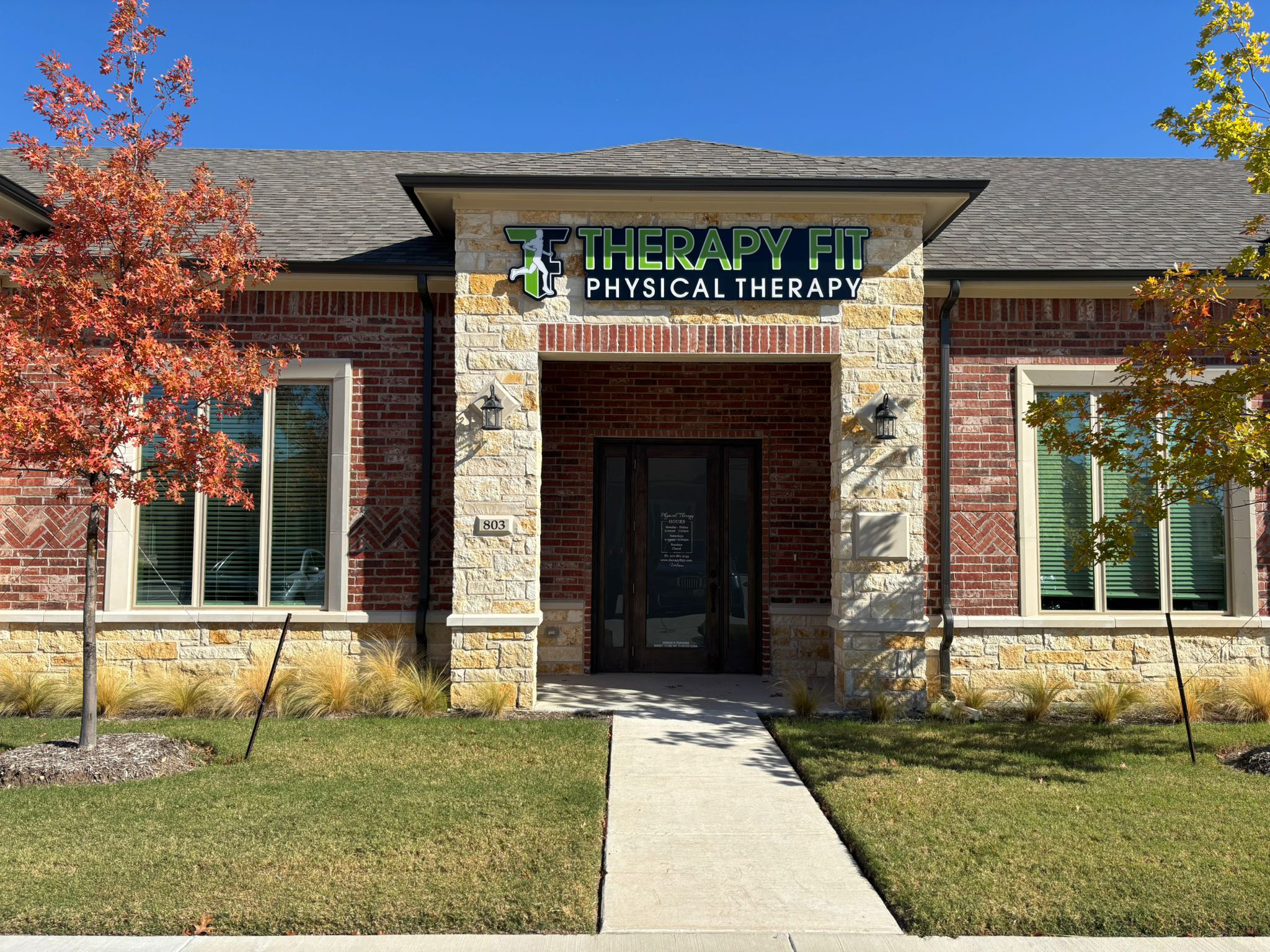
Exciting News – Our New West Frisco Clinic is Open!
We’re thrilled to announce that Therapy Fit has officially opened a brand-new location in West Frisco, TX! This expansion allows us to serve even more patients with the same exceptional, evidence-based care you’ve come to expect from our team.
📍 New Address:
400 Stonebrook Pkwy, Unit 803
Frisco, TX 75036
📞 Phone: 972-845-4739 | Fax: 972-861-5156
📧 Email: therapyfit.wf@gmail.com
⏰ Hours: Monday–Friday | 8:00 AM – 7:00 PM
We celebrated our Grand Opening on August 18, and our doors are now open to welcome you and your loved ones!
What We Treat
Our West Frisco clinic specializes in helping patients recover from:
- Auto Accident Injuries
- Frozen Shoulder
- Back & Neck Pain
Our Evidence-Based Services
- Manual Therapy
- Hands-On Joint Mobilization
- Functional Mobilization Techniques
Whether you’re looking to restore mobility, relieve pain, or prevent future injuries, our expert team is here to help you move better and live stronger.
Ready to schedule your appointment? Call us today at 972-845-4739 and experience the Therapy Fit difference at our new West Frisco location!
Don’t Let Your 2025 Insurance Benefits Go To Waste!
Take charge of your health today and make the most of your insurance benefits!
If you’ve already met your deductible this year or have funds left in your HSA account, you can take advantage of our remarkable opportunity at Therapy Fit Physical Therapy. Don’t let these valuable benefits go unused!
Our Patients Get Great Results
“I am going for Pelvic Floor and already feel so much better!“
“I have had a great experience with the Dr. and physical therapist! I am going for Pelvic Floor and already feel so much better! The Dr. and staff are very nice and friendly. I will recommend to anybody that needs physical therapy to go see Therapy Fit.”
– B.W.


Don’t Let a Slip-and-Fall Accident Hamper Your Holiday Celebrations
We’re in the peak holiday party season, so you may be out and about in icy conditions more than you’d like. However, a few simple tips can help you stay safe and avoid a serious slip-and-fall accident.
- Tip 1: Avoid Icy Patches. Try to walk on rough terrain, which will be less slippery (and less dangerous). Look for paths that appear bumpy under the snow and don’t smoothly reflect the light.
- Tip 2: Bring a Change of Shoes: Rather than wearing those high-heeled pumps to the party, carry them with you so you can wear flat shoes that provide more traction as you navigate icy terrain. Then, change before you make your grand entrance.
- Tip 3: Work on Balance Training with Therapy Fit Physical Therapy: Dedicated balance exercises will help you better stay on your feet in icy conditions. We’ll conduct a comprehensive balance assessment and develop a program customized to your needs.
A few precautions are all it takes to ensure a safe holiday season, no matter the weather conditions!

The Role of Eye and Head Movement Exercises in Vestibular Therapy
When our patients first learn about vestibular rehabilitation, some of the exercises are familiar, such as balance training or core strengthening. But many of our patients are surprised by the inclusion of eye and head movement exercises. How can something so small be so effective?
The truth is, these exercises are at the core of vestibular rehabilitation therapy because they help retrain how your eyes, inner ear, and brain work together, directly addressing the underlying problem causing your symptoms. With enough practice, your brain adapts, reducing dizziness and improving stability during daily activities.
A Closer Look at Eye and Head Movement Exercises
1. Gaze Stabilization
This exercise asks you to focus on a stationary object while moving your head side to side or up and down. It retrains the vestibulo-ocular reflex (VOR), which keeps your eyes steady during motion.
Gaze stabilization is particularly useful for people who experience dizziness when turning their head or looking around quickly.
2. Eye Tracking and Visual Focus
These exercises involve following a moving object with your eyes without turning your head. They improve coordination between your body’s visual and balance systems, making it easier to focus while walking or riding in a car.
3. Head and Body Movement Progressions
Once you achieve basic gaze control, our physical therapists will add more complex movements, such as walking while turning your head, changing direction, or standing on uneven surfaces. These progressions simulate real-life movement challenges, allowing you to gradually see improvements in a safe and controlled way.
Curious to Learn More? Schedule an Appointment
Don’t let motion sensitivity control your life! The team at Therapy Fit Physical Therapy will work closely with you to develop a program tailored to your specific needs. Give us a call today to get started.
Exercise of the Month
Calf Raises
Stand tall with your feet hip-width apart and your hands resting on a chair or countertop for support. Slowly rise up onto the balls of your feet, lifting your heels off the ground. Hold briefly at the top, then lower back down with control. 3 Sets, 10 Reps. (Materials needed: chair or countertop for balance)


These No-Bake Chocolate Peppermint Balls are a festive, bite-sized delight that’s as easy to make as it is to enjoy. Rich, minty, and perfectly sweet, they’re the ultimate holiday treat without the hassle of baking!
Enjoy This Healthy Recipe!
No-Bake Chocolate Peppermint Balls
- 10 tbsp cocoa powder
- 6 tbsp maple syrup
- 1/4 cup almond butter (can use SunButter or nut-free spread)
- 1/4 cup unflavored pea protein powder
- ½ tsp peppermint extract
- 1/4 tsp sea salt
- 2-4 tbsp crushed candy canes
- 2-4 tbsp dairy-free chocolate chips (optional)
Put everything except the candy cane and chocolate chips into a bowl and mix well. Slowly add water if needed (You may not need any water if your almond butter is runny). Start with a teaspoon and slowly add until you get a well-mixed batter. If you add too much then the batter will be too soft to roll. Add the candy canes/cacao nibs and chocolate chips and mix again. Allow batter to chill in the fridge while you clean up, then roll into balls.
Let’s Get You Better ASAP!
Don’t let pain dictate your life. Take the first step towards reclaiming your mobility and well-being with our expert support. Start your journey to a healthier you today.